
Shifty
Coming for them from all angles

Our recent family tv viewing is a mix of Stanley Tucci, Taskmaster and the new series from Adam Curtis, Shifty1.
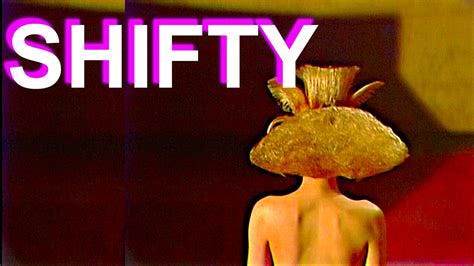
It’s about (maybe, don’t quote me on this) how the changes in Thatcherite Britain led to some of the instabilities of where we are now. And in programme three, we’re onto the rich, and this includes the aristocracy.
More specifically, Curtis is interested in the Duke of Westminster, who we first meet at Eaton Hall, watching Arthur Scargill on the television while eating his dinner from a tray.
This footage is funny enough in its own right, and it’s fascinating to get a view of Eaton Hall in one of its more apologetic incarnations, with the 1960s modernist house sat next to the remains of the giant Gothic house, the bell tower still looming over a new house which looks like a 1960s police station.
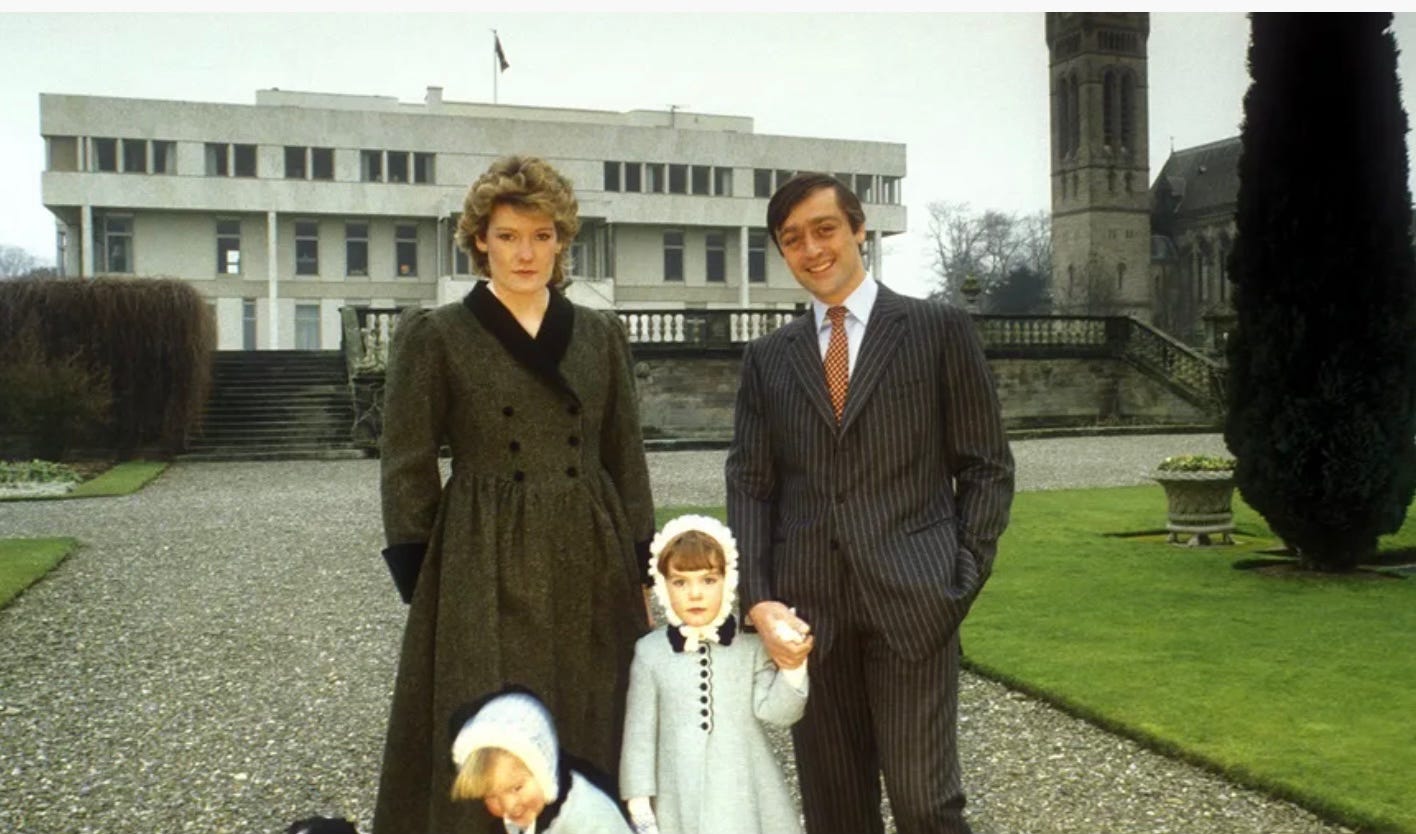
It’s the Duke pictured above who was watching Scargill, and he keeps popping up throughout the episode, being challenged about his wealth but clearly totally convinced of his own superiority. Curtis is particularly interested in the way that almost everything that the Westminsters own is protected from tax by the medium of trusts.
He’s bang on the money here, but what’s not said in Shifty (for good reason, there’s lots going on besides the upper classes) is that a huge swathe of history sits behind this tax-avoiding edifice. Because the vast majority of stately homes have been held in trust for about the last two hundred years.
The reasons for this were less about tax - the aristocracy paid very little until almost the end of the nineteenth century - but more as an insurance against idiots. Specifically the kind of idiots who might inherit the house, spend all the money on women and gambling and lead to the breaking up of the estate.
The result was that few lords actually owned their houses, land or the best bits of furniture. These were instead held under a system called ‘entail’, in a trust for the next one or two generations and one that was renewed every time the next heir married. These trusts defined the financial landscape of an aristocrat’s life: how much money had to be paid to his mother if she became a widow, what the marriage portion of his daughters would be and much more besides. The only way he could sell land, or even some furniture and paintings, was with the agreement of the Trustees, who were not inclined to let this happen.
Not every family ran things this way, but it was an effective manner of keeping the estate running down the male line, if you like that sort of thing. Which they mostly did.
This system tells us a couple of things. Firstly, that the integrity of the house and estate is more important than any one member of the family (and certainly far more important than any women who happen to be born into it).
The second is a side note: the legal definition of ‘heirloom’ is the pieces of furniture and other things (plate, jewellery, so on) which are part of the estate held in trust and so cannot be sold without the permission of the Trustees.
Finally, the result of all of this in the present day is that the upper classes pay less tax, because a lot of the biggest houses in England and their estates are now held as charitable trusts.
Trusts seem lovely and comfy and familiar to the upper classes, because a system much like it has been going on for centuries. So now they can put their houses into a trust all over again, save money, and pretend that this is for the good of us all.
This has happened in all sorts of places I have visited for Burning Down the House - Harewood, Blenheim and Highclere among many - but today we are going to focus on Chatsworth.
The Chatsworth House Trust has been set up as a charity which leases the house and whose aims are:
To preserve for the public benefit the mansion house known as Chatsworth House in Derbyshire together with its ancillary buildings gardens arboreta woodlands and park ('Chatsworth') and to promote for the public benefit the study and appreciation of Chatsworth as a place of historic and architectural interest and natural beauty
This is done for, as the Charities Commission website puts it, the benefit of “The General Public/mankind”.2
Being set up in this way means that the Trust can claim grants and tax relief on all manner of expenditure (including commissioning new artworks for the house and gardens3) on the basis that it is done for the public good.
At this point there are a couple of things I want to unpick. Firstly, it’s a big question as to whether any part of this is entirely for the good of all mankind, but that is one which takes a whole book - and indeed quite a number of blog posts as well - to answer. In general though, I think not.
I would also argue that among the key beneficiaries of the charity are the Duke and Duchess of Devonshire who get to live among their ancestral heirlooms in the grand house without having to pay for much of the work required, not even what they spend acquiring more Big Art. The Trust’s reports are very keen to point out in their opening paragraphs that the Devonshires “pay a market rent for the rooms they occupy” but I am not sure that anyone else is getting the opportunity to live there, even at a market rent.
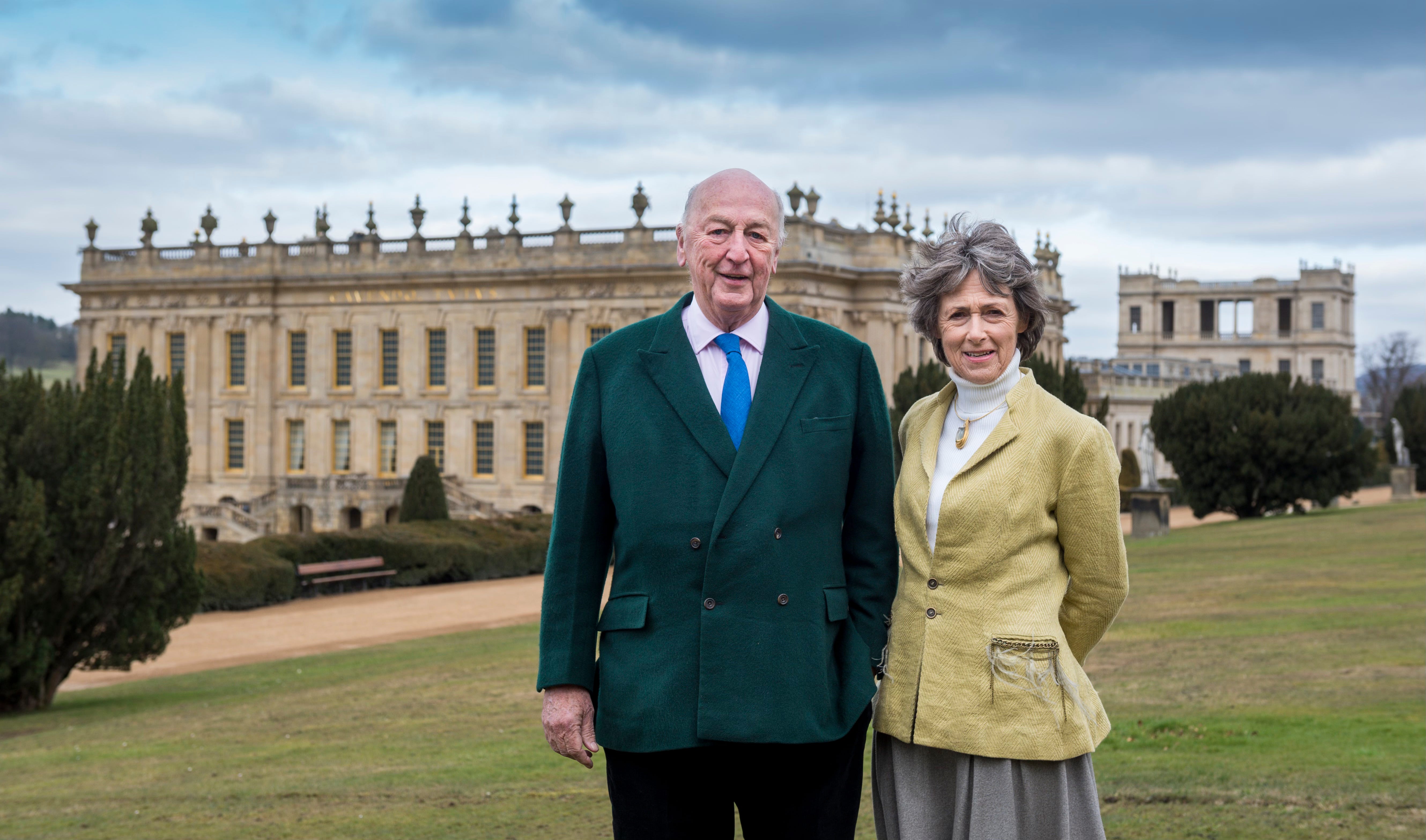
In short, the aristocracy get tax relief for living in a house that they cannot afford and can pretend at the same time that this means they are doing good for other people.
Just in case you think I am exaggerating, , let’s dive into the Chatsworth Trust report for 2019, which is particularly choice.
There’s plenty to see, starting with the Trustees of the charity. Chair is the Duke of Devonshire, with the Duchess as another Trustee along with various other people including one who sounds as though he might be impartial but is actually the eldest son of the Duke and Duchess of Devonshire.
Then there’s an introduction - from the Duke and Duchess of course - and a description of what the house and its contents have been up to over the last year. The major exhibition in 2019 was called The Dog and “was a recognition of the influence the canine companions of the Cavendish family have had upon the life of a working estate, and ultimately the collections at Chatsworth, over the last five centuries.” It was also co-curated by the Duchess. Any other charity would have been ripped to shreds for this nepotism and general lack of access for anyone who isn’t the Devonshires, but hey, it’s the aristocracy not paying tax, so it’s all fine.
This, however, is not the pinnacle of the report. A double page spread is also devoted to the installation of Lord Burlington - heir to the estate - as High Sheriff of Derbyshire.
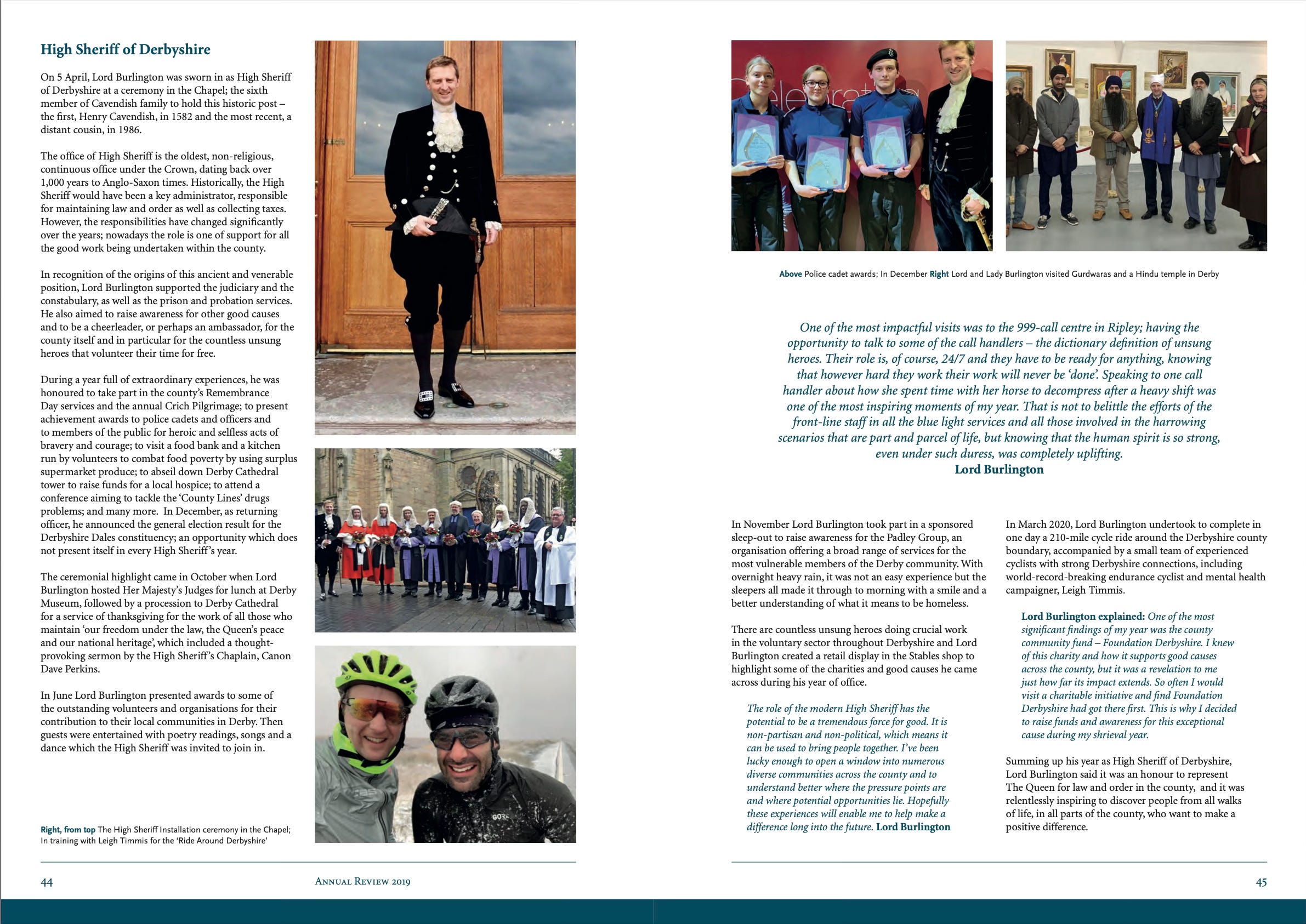
I could devote an entire post to unpicking how many of the ancient signifiers of aristocratic power, patronage and general dominance are involved in this event, and could also spend a very entertaining hour looking at the text in detail.
However, we’ll leave that for now and just point out that, however much his parents might be proud, this is nothing at all to do with the running of the Chatsworth House Trust. Unless of course, the actual point of the charity is the keeping of the Devonshire family in the style to which they have been accustomed for centuries.
I find it hard to conclude anything else.
Available on the iPlayer only. And yes, we are a bit odd but I’m resigned to that.
As my previous posts on Chatsworth will attest, it’s definitely there for the benefit of mankind rather than women.
It turns out that, as far as I can tell, the Chatsworth House Trust commissioned the most self-regarding of all the modern artworks in the house, the depiction of the DNA of the Devonshire bloodline and their racing colours in ceramics, which I have written about on here. It irritated me quite a lot even before I knew that it had also been set against tax.